
"called honey"
5000 article(s) found

Introduction to the flavor description of Costa Rican yellow honey coffee beans with high sugar content
Flavor description of Costa Rican yellow honey coffee beans with high sugar content: (Yellow Honey) retain about 30% pectin and dry directly with sunlight for about 8 days, so that the water content reaches a stable value. Red Honey: (Red Honey) retains 80% of the pectin, because it retains more pectin, so it takes more time to dry and reduces sunlight.

What does half-sun volcano treatment mean? How to distinguish between honey treatment and half-sun coffee beans?
Professional coffee knowledge exchange more information about coffee beans Please follow the coffee workshop (Wechat official account cafe_style) We often hear about the sun, honey treatment, washing and so on in coffee shops, which refers to the different ways of handling raw beans. When coffee still grows on the tree with peel and pulp, it is called coffee cherry. Coffee beans are only used in the middle of the seed and picked.

Costa Rican black honey | Honey treatment from the Costa Rican champion processing plant, Shumawa processing plant.
Costa Rica Sumava de Lourdes black honey Costa Rica. Shumawa Manor. Kaddura. Black honey 01 | about Costa Rican coffee cultivation was introduced by Cuba in 1779 and exported for the first time in 1820. There are now about 32000 coffee farmers, with an average planting area of less than one hectare (10000 hectares) per farmer. The population of Costa Rica is 4, 100, and 0

Indonesia West Java Honey treats Fine Coffee Bean grading, Price, Raw Bean and roasting degree
Professional barista communication please follow the coffee workshop (Wechat official account cafe_style) production area: Indonesia Tiegula Mountain elevation: 14001600 meters baking degree: shallow treatment: honey treatment taste description: strong fruity, with plum and jackfruit flavor, clean and sweet back to sweet. Flavor: complex fragrance of imported flowers, with tropical fruit flavors like mango and jackfruit

Costa Rican coffee bean flavor Costa Rican coffee bean characteristic fruit sweet and sour taste mild
Professional coffee knowledge exchange more coffee bean information please follow the coffee workshop (Wechat official account cafe_style) front street-Costa Rica coffee introduction Costa Rica, located in the Central American isthmus, high latitudes produced coffee beans are world-famous, rich, mild taste, but extremely sour, the coffee beans here have been carefully handled, because of this, there are high-quality coffee

Fragrant, pure Salvadoran black honey treated coffee beans flavor description manor taste variety characteristics
Flavor description of coffee beans treated with El Salvador black honey the characteristics of manor taste varieties are introduced that Pacamara varieties are artificially cultivated varieties of Pacas and Maragogipe. It was first cultivated by researchers in El Salvador in 1958. Pacamara is a rare excellent variety under artificial breeding, which is better than blue, which perfectly inherits the advantages of the mother plant, and has the excellent mouth of Pacas species.

Costa Rican Coffee beans hand Honey handling Coffee beans what is the flavor by hand?
Professional coffee knowledge exchange more coffee bean information please follow the coffee workshop (Wechat official account cafe_style) We usually see the honey treatment methods are: yellow honey, red honey, black honey yellow honey: about 40% of the pectin is removed; the drying method requires the most direct heat absorption, the maximum light drying, lasting about 8 days to achieve a stable value of water content red honey: about 25% pectin

Honey treatment of Coffee Bean
When it comes to the new stars in the production process of boutique coffee, we have to mention "honey treatment". At the WSC competition, known as the Coffee World Cup, the Angel Coffee Manor built by Taiwan in Central America and Nicaragua won the runner-up in 2010 with "Honey treated beans", becoming the pride of the Chinese coffee industry.

Introduction to the treatment method of raw beans-- what is honey treatment? How to deal with coffee
Honey treatment is used in almost all the producing areas of Costa Rica. This method is also widely spread throughout Central America. Because the surface mucosa of coffee beans is extremely sticky and smooth and the sugar content is extremely high, it is often called honey. In the process of honey treatment, coffee will leave some or all of the honey when it is dried. After the coffee fruit is picked, graded and peeled, it is dried.
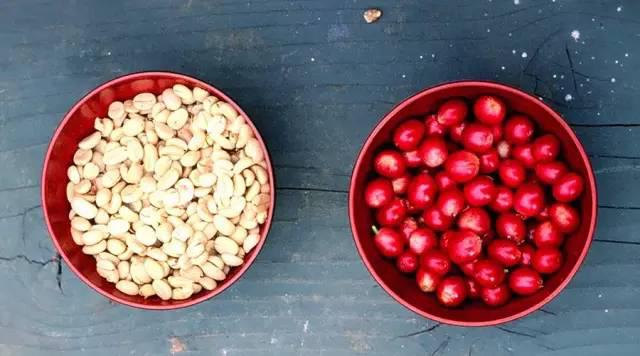
Classification and introduction of Refining methods of Coffee Raw beans
When drinking hand cups in a good cafe, the barista is sure to mention these proper terms when introducing beans. Whether washing in water or in the sun, in fact, it is the refined way of coffee beans (processing). What is refined way to review first, we usually say coffee beans are actually seeds; the fruit of coffee is called coffee cherry (Coffee Cherry).
Why is Costa Rican coffee called "extra hard beans" the coffee of Costa Rican yellow honey coffee
Professional coffee knowledge exchange more coffee bean information please follow the coffee workshop (Wechat official account cafe_style) high-quality Costa Rican coffee is called extra hard beans, this kind of coffee can grow above 1500 meters above sea level. Altitude has always been a problem for coffee growers. The higher the altitude, the better the coffee beans, not only because higher altitude can increase the acidity of coffee beans.

High-quality coffee learns what is secret-processed coffee beans
Honey treatment is a kind of treatment which is between the sun treatment and water washing. It keeps the coffee clean, and although the brightness decreases, it increases the sweetness and caramel flavor of the coffee. The appearance of honey-treated beans has a distinct sticky layer. But the honey treatment method is very dependent on the local climate, the weather must be dry and adequate sunshine, otherwise it is not suitable for honey treatment. Honey treatment

Measurement data of flavor description cup treated with black honey in Costa Rica Las Lajas processing field
Communication of professional baristas Please follow the coffee workshop (Wechat official account cafe_style) Las Lajas processing farm black honey treatment the most fashionable way in the coffee industry nowadays is honey treatment, we need to figure it out carefully. The greatest function of honey treatment is to increase the complexity and sweetness of coffee beans, so that they have different tastes at different times of harvest. The so-called honey treatment

Honey-treated coffee beans what is the difference in flavor description of sun-washed coffee beans
Honey treatment coffee beans sun washing method flavor description what is the difference between semi-washing method: first remove the skin with water, and then go to the sun. This is a relatively new and rare method. This method is only suitable for specific areas of some countries, with a long drying period. The coffee produced by this method is sticky, and the mucus will not be fermented in the tank.

Introduction to the Flavor of different treatments of Red Honey by washing Coffee
Introduction to the flavor of different treatments of sunburn honey by washing coffee. The process of natural solarization (Natural/Dried-in-the-Fruit) is the simplest. The fruit begins the process of sun drying without treatment after picking. This is the oldest method of treatment in existence. This method is still used in places such as Ethiopia and Brazil. The natural solarization method is used in

Introduction of Costa Rica Yellow Honey Coffee Bean Grinding scale Variety Taste treatment Manor
And the so-called honey treatment method means that the coffee beans are washed to remove the skin and flesh of the fruit.

Costa Rica Brenka Treasure Estate Coffee Introduction and Flavor Features Honey Treatment Features
Brunca Treasure Estate Coffee Introduction Brunca (Brunca) producing area of Rivas town (Rivas), a Costa Rican capital San Jose (San Jose) is located about 150 kilometers southeast of the drive to three and a half hours, the middle also through the elevation of 3000~3400 meters, can enter the remote coffee producing area, a has always been considered not to produce good coffee producing areas. This one ran for about three years.

Introduction of Coffee West Java Honey flavor description and taste
a. The picking and flotation process in the early stage of mechanical peeling (exocarp peeling) is similar to that of water washing, but the link of mechanical peeling is very different. The washing method requires the pulp to be removed to ensure its cleanliness, while the mechanical peeling process of honey treatment can adjust the caliber of the peeling machine to determine how much pulp to remove. The whole is divided into three categories, such as the following figure (from left to right): 1. Get rid of more than 50% fruit

Is the flavor of honey treated coffee good? How does honey handle coffee come from? Honey-treated coffee beans
Professional coffee knowledge exchange more coffee bean information please follow the emergence of honey treatment in the coffee workshop (Wechat official account cafe_style), which can be said to be the response of the processing farm to the demand for boutique coffee. The technology to control the residual pulp and the degree of fermentation is to determine the balance between the sweetness and fermented taste of the coffee in the cup. Sun-dried beans scare a lot of new friends, it is that strange fermented taste

Suggestion on hand-flushing parameters of Indonesian West Java Honey for the treatment of Fine Coffee beans in Aishani Manor
For the exchange of professional baristas, please follow the Manning made by hand in the coffee workshop (Wechat official account cafe_style). 15g powder, medium grinding (small Fuji ghost tooth cutter 4 grinding), v60 filter cup, 88-89 degrees water temperature, 30g water injection for the first time, steaming for 27 seconds, water injection to 105g water cut off, wait for the water volume of powder bed to be reduced to half and then water injection, slow water injection until 225g water, do not use water at the end.